Written on December 27, 2024
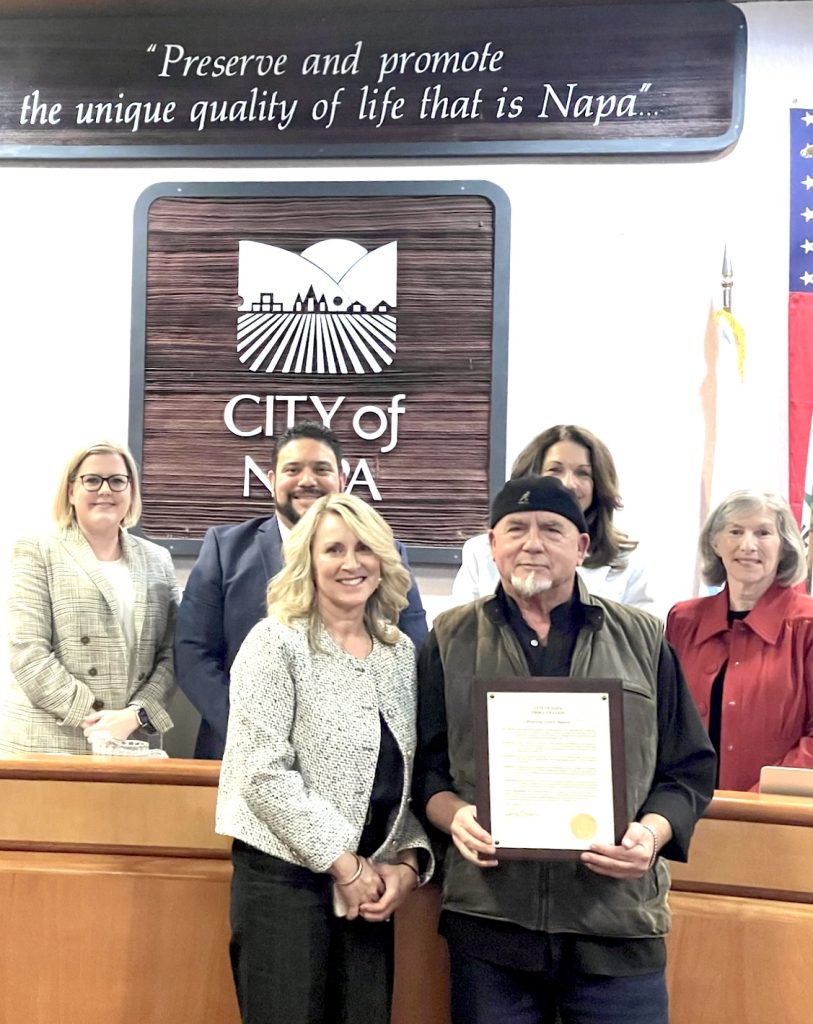
Musings of a Planning Commissioner December 2024 – Gordon Huether
My German immigrant parents brought me to Napa in 1962 when I was 3 years old. My parents came here looking for work. Napa’s population was +/-22,000. Napa was a blue collar, hardworking, small-town community. Mare Island was still thriving as were many other industrial based businesses.
Our first home in Napa was a converted chicken coop on Big Ranch Road. My father eventually got a job at the old Carither’s Department Store in downtown Napa as a window decorator where he worked for around 25 years.
They eventually bought a house in Green Meadows on Greenbach Street. From there I went to Irene Snow school and from a child’s perspective I was living a dream, my friends, going to school, helping my Dad at his job on the weekends downtown – it was the proverbial American Leave it to Beaver life.
In 1969 my dream became a nightmare. My mother took us four kids away from Napa away from our father and moved us to San Francisco where I stayed through High School. My Leave it to Beaver life became an urban, inner-city melodrama. I was emotionally devasted. What sustained me during those years was clutching to the memories of my life growing up in small town Napa.
I came back to Napa in my teens, I was gone maybe 5 years and when I came back My City was Gone ( thePretenders) as I remembered it. Like so many communities across the United States, Napa was experiencing suburbanization causing downtowns to go into decline.
The solution became “redevelopment” and in Napa’s case it meant tearing down almost 50 buildings, many historic, making all the streets one way, erecting very ugly, massive buildings, creating brick plazas where there were once buildings, and to top it all off a massive clock tower – all of it very poorly done and as ugly as sin, all in the name of progress and economic opportunity. I was emotionally devasted once again.
Instead of redevelopment transforming downtown Napa into a vibrant urban center it instead did the opposite and created economic decline that continued for more than 30 years. Downtown became a ghost town; it seemed every other storefront was empty. The City leaders were desperate for anyone to come invest, build and develop but no one would in large part because of the perpetual flooding. And then came flood control which was a major game changer. Napa was again at the cusp of being open for business.
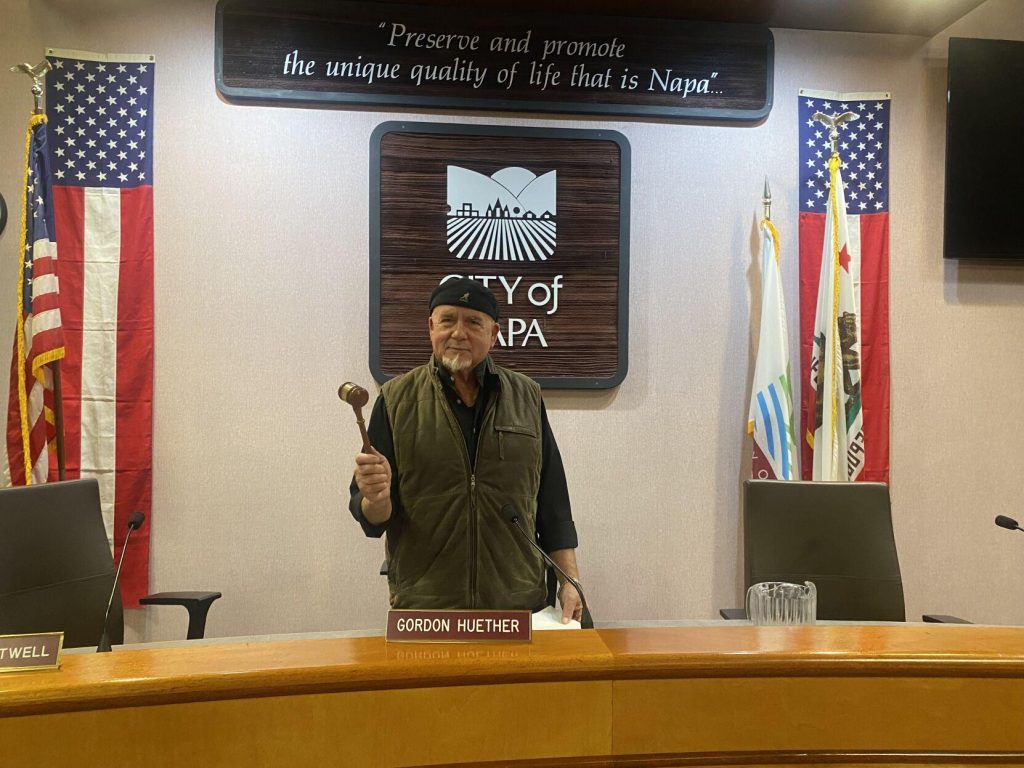
By this time, I had established my family and business here and had taken notice of the changes coming which leads us to my 20 years on the Planning Commission which began in 2004.
It was a coming home of sorts; I was not able to do anything about my leaving Napa at the age of 10 against my will and was not able to do anything about the disaster of our redevelopment era of the ‘70s but now as an adult I could positively affect the outcome I hoped.
My path to the Planning Commission started when I got wind of a 350-room hotel being planned at the corner of Silverado Trail and First Street referred even today as the “Ritz Site”. I became incensed that the city would even consider such ridiculous architecture – I referred to it then as an Italian birthday cake. But let’s not forget Napa still had the mentality of desperate economic development plus we had no design standards of any kind and there were no informed voices that knew how to speak to architectural excellence. I found myself being that voice and pitched a fuss. Someone said to me; “Gordon, you should join the Planning Commission”. I had no idea what a PC even was.
Napa Register front page news in December of 2008; City Council Appoints Controversial Choice to Planning Commission. I was as surprised as anyone that I was appointed.
At that time, we had no design guidelines, no downtown specific plan, no public art ordinance, no guiding principles to help guide our urban planning, just a hope and prayer that this time we’d get it right. My first Planning Commission meeting was regarding Mike DiSimone’s Riverfront project on Main Street. I voted no because it made me think of Santana Row and struck me as phony, my 4 colleagues voted yes.
The next meeting was for the Andaz Hotel project across from City Hall. Everyone was up in arms because it was too tall, height was not the problem, the problem was it was substandard architecture, think Hawthorn Suites. I’m proud that I was able to convince my colleagues to send the applicant back to the drawing board and come back with something of a higher quality. And they did and this set the tone, the standard for the next 20 years.
I understand that not everyone is happy about Napa’s transformation, not happy with the growth and development, not happy with becoming a tourist economy and I have empathy for that point of view. Change is always uncomfortable, but it is also a constant. Our population has grown from 22,00 in the late 1960’s to 76,000 today. We need to accept that reality and make the best out of it. Napa is no longer and has not been for quite some time the Napa of my childhood. It no longer has a basis in an economy driven by industry – that Napa is gone.
Speaking for myself I am proud of what we’ve become and my small contribution to it. When I walk downtown, I see cultural diversity, vibrancy and an incredible transformation.
There is still much work to be done, and I hope more members of the community will step up, roll up their sleeves and lean into creating a beautiful future for this City that I love so much.