Menlo Park Labs | Menlo Park, CA | 2019
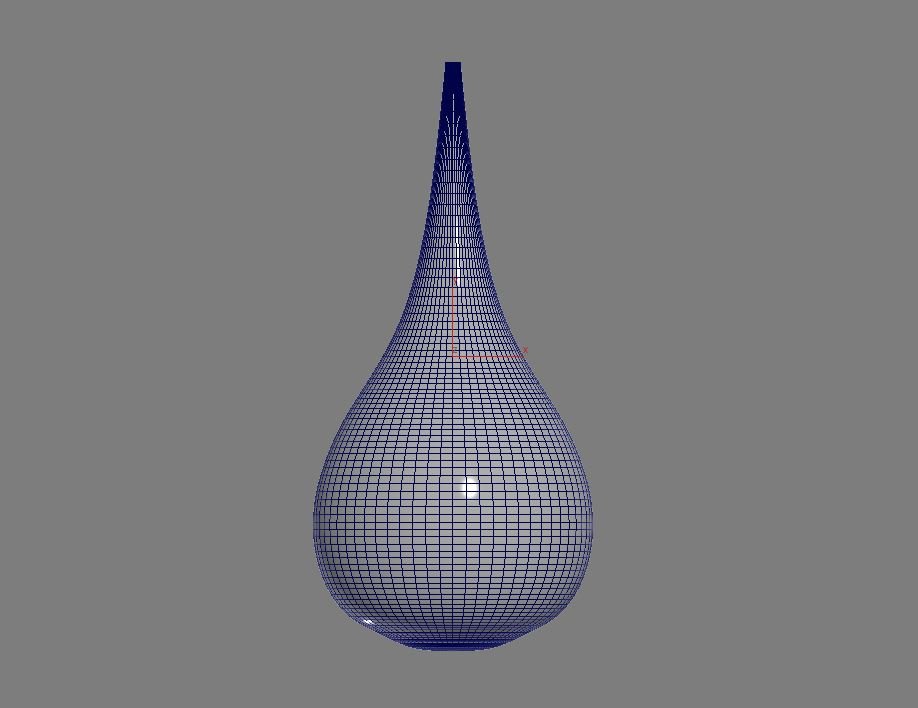
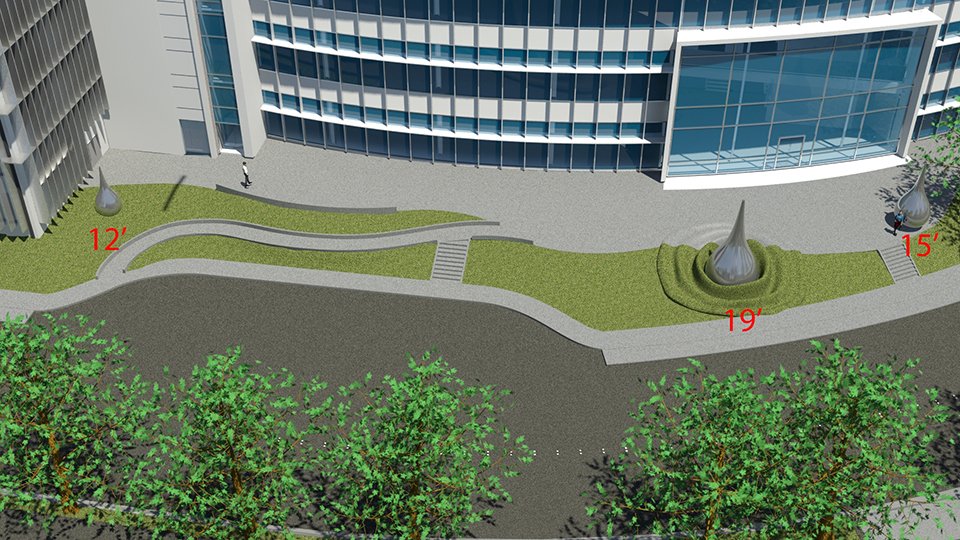
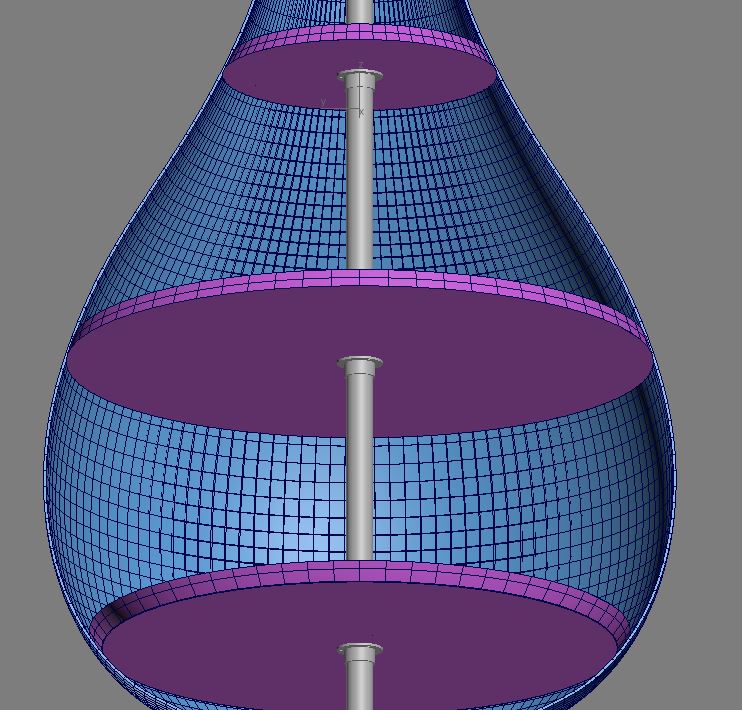
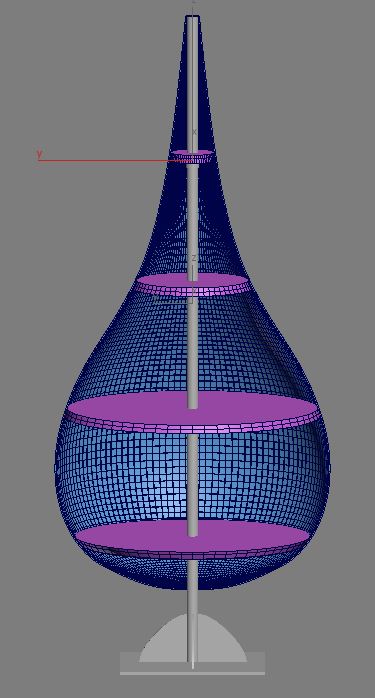
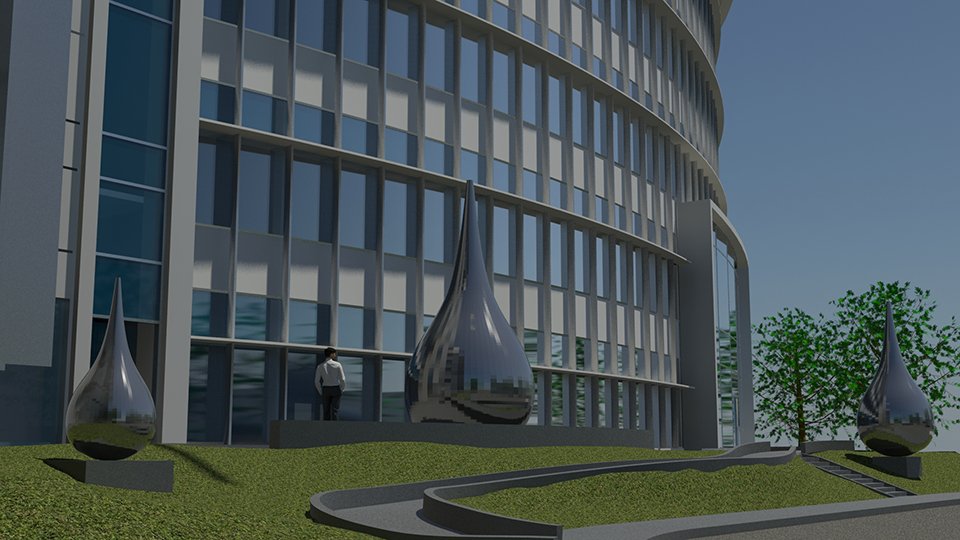
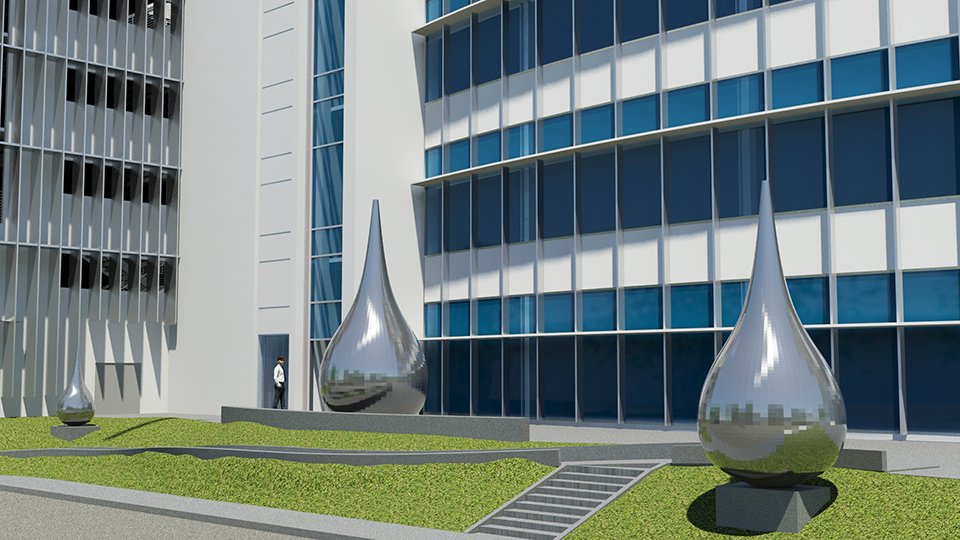
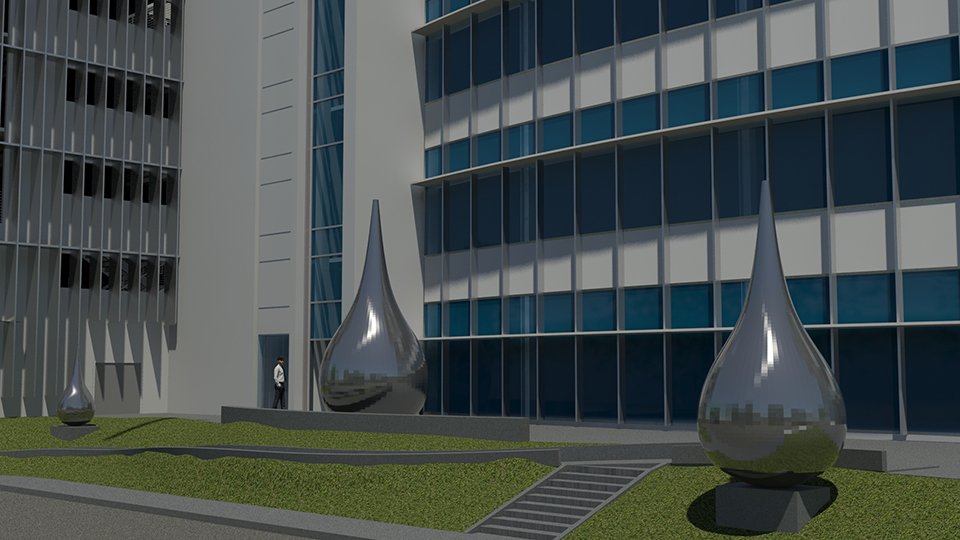
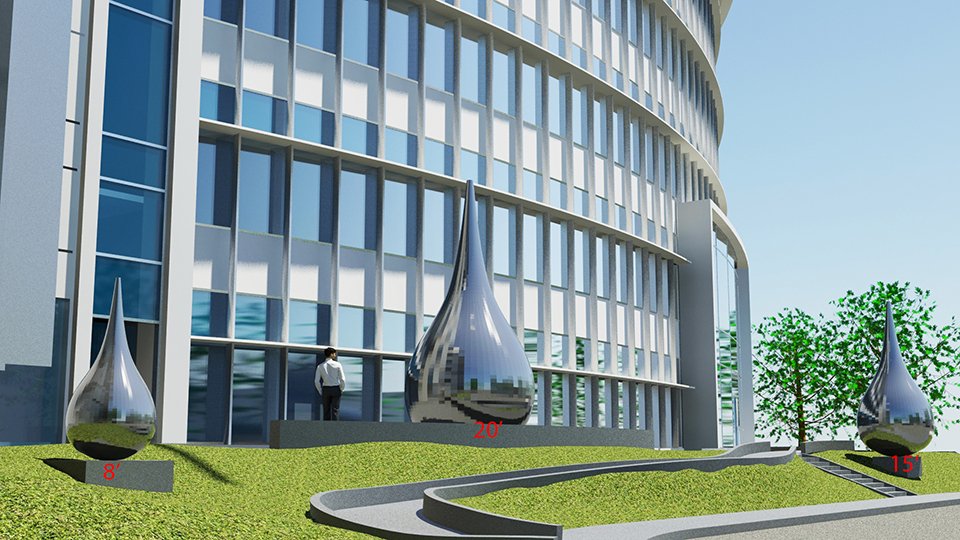
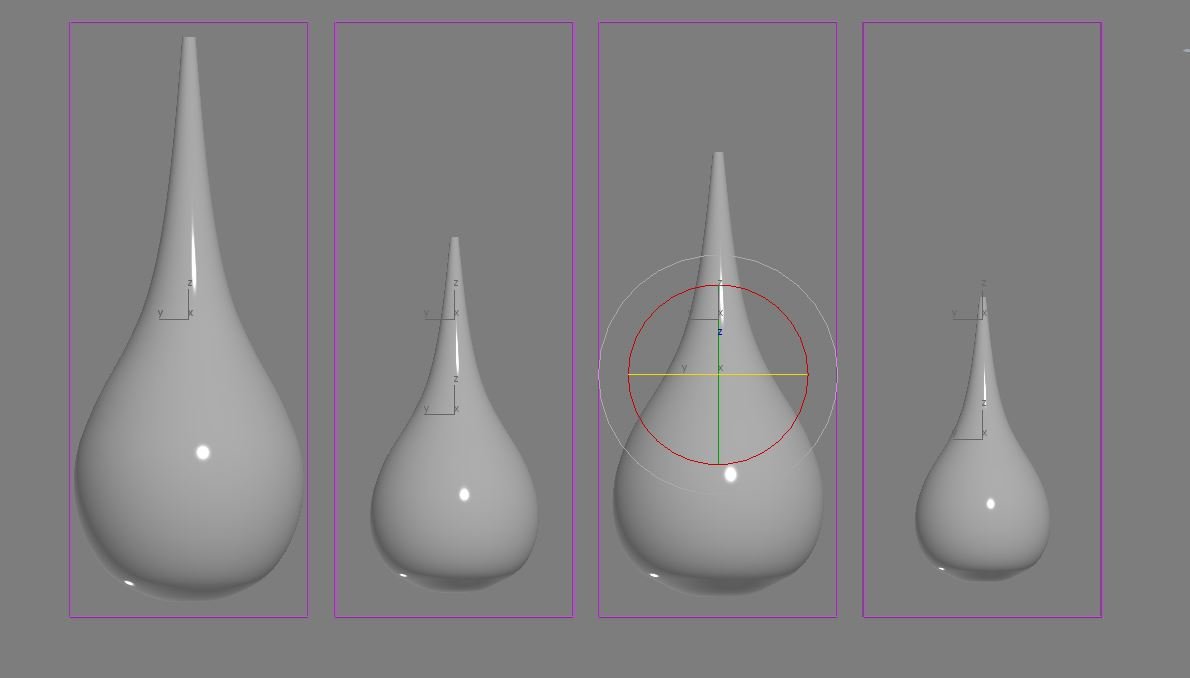
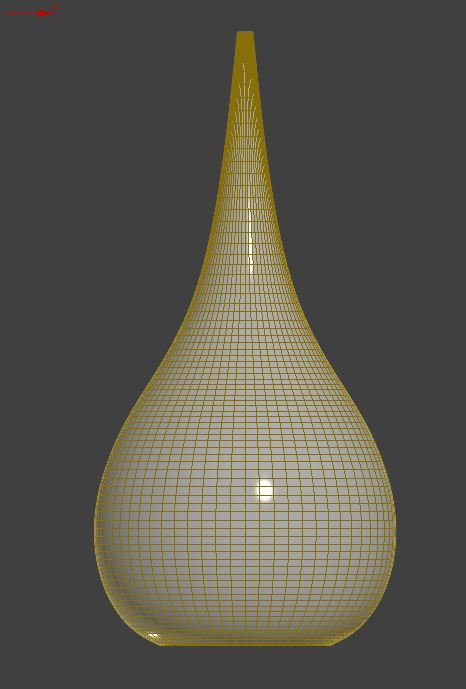
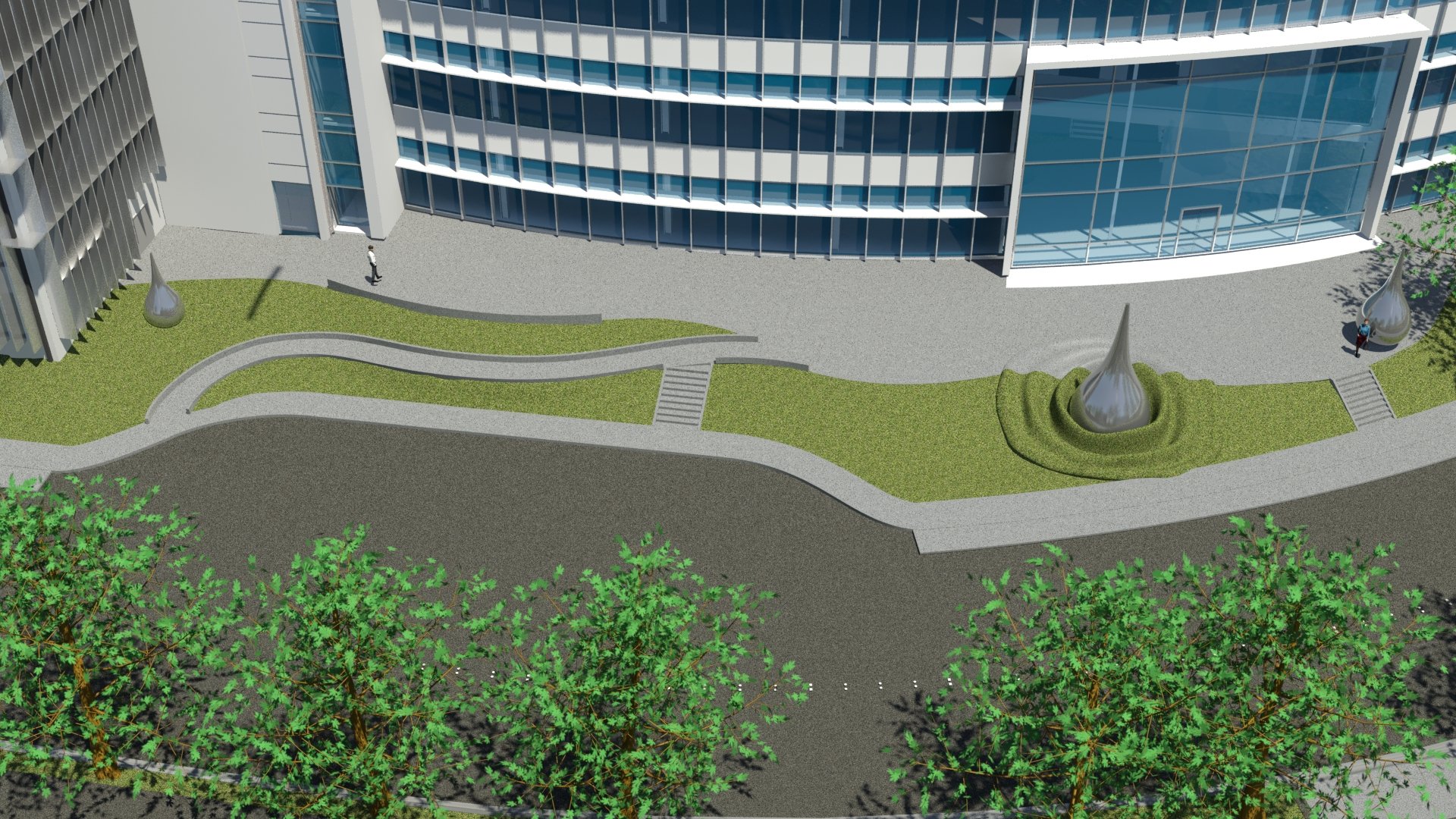
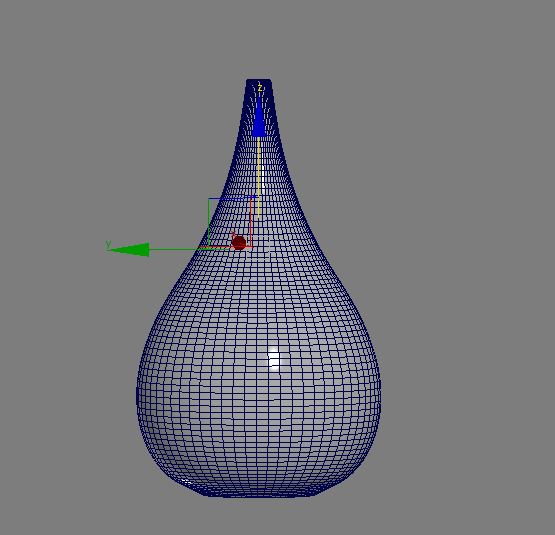
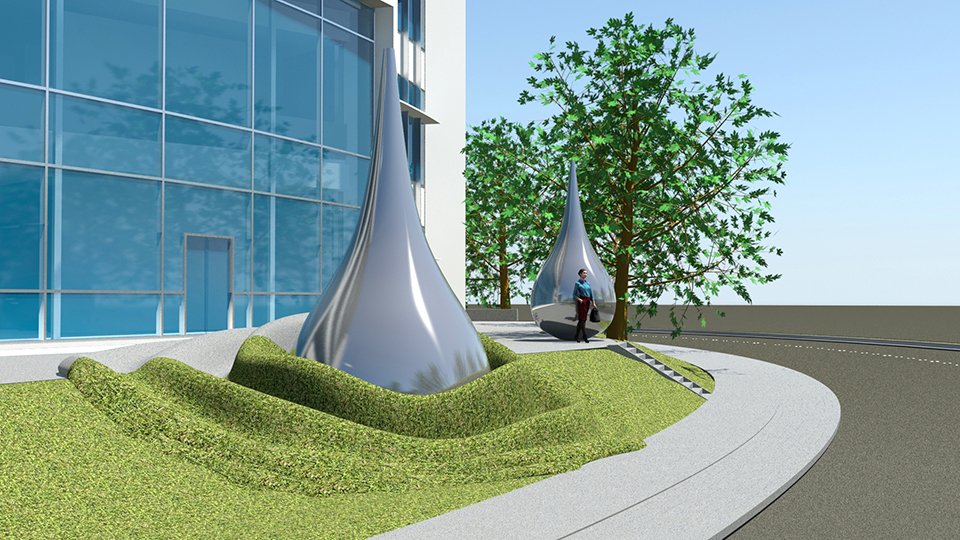
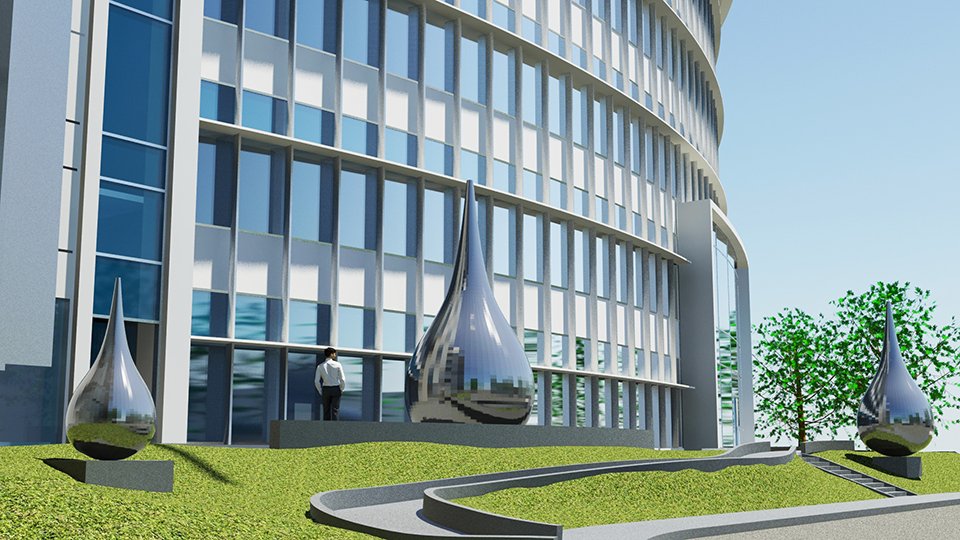
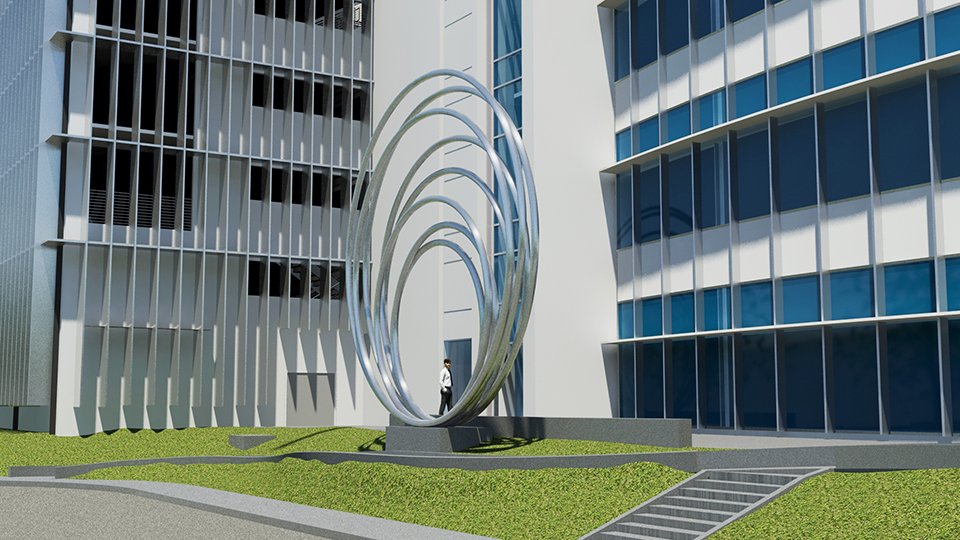
Tarlton Droplets | Mirror-polished stainless-steel | Three droplets: 19’ H, 15’ H and 12’ H
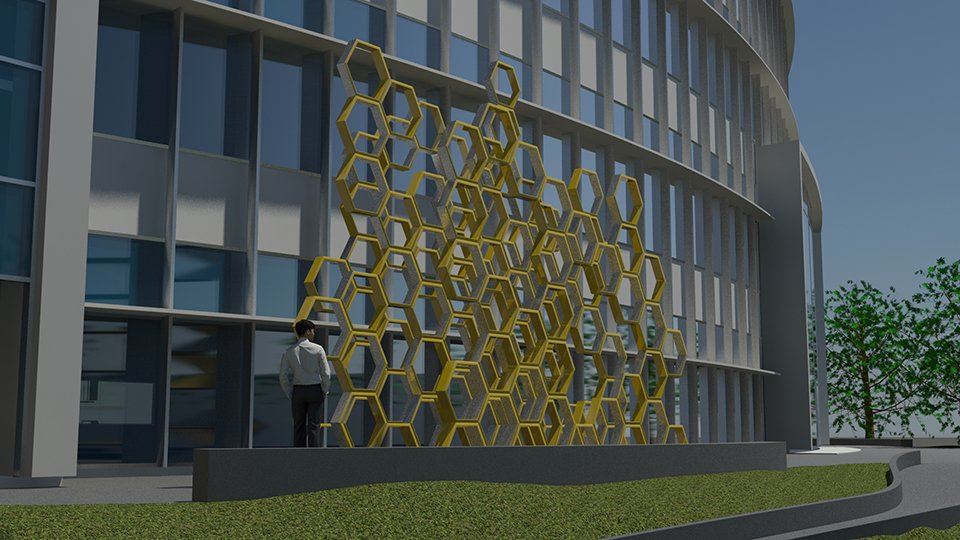
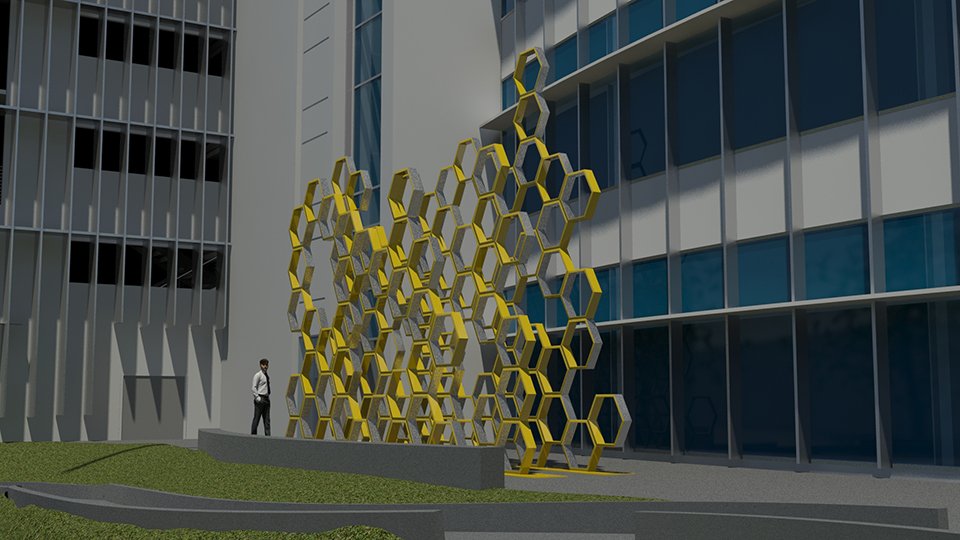
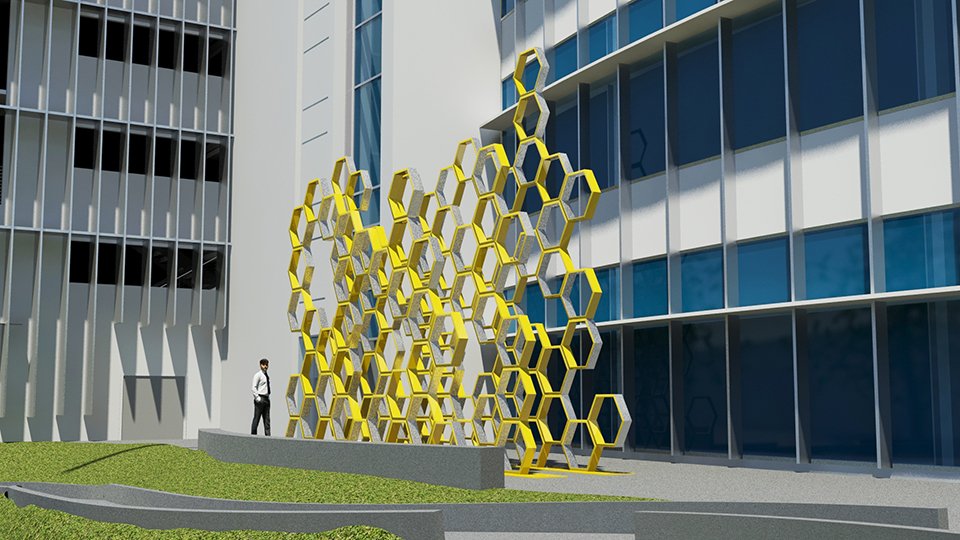
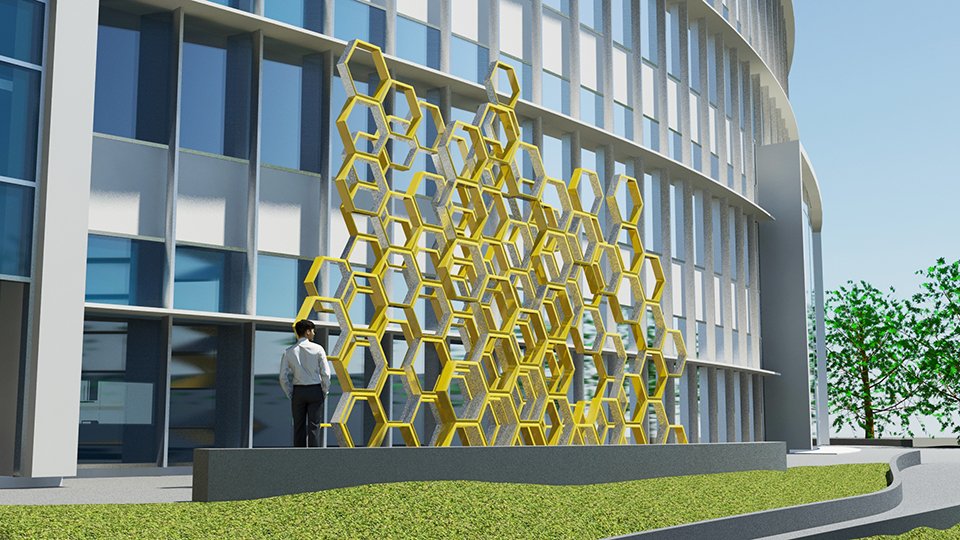
Tarlton Hexagons | Aluminum hexagons, dichroic glass
Tarlton Properties, a commercial property development and asset management company, commissioned Gordon to design an innovative series of research and science-based artworks for their signature property, Menlo Park Labs, a modern, park-like campus focused on life science and healthcare, spanning more than 50 acres and 18 buildings located in Menlo Park, CA. Tarlton specializes in the design of vibrant work environments, and recognizes the power that artwork can have in creating a holistic employee experience.
When Tarlton acquired the O’Brien Drive site, they were faced with the challenge of turning a warehouse distribution center into a state-of-the-art life science research and development facility. In addition to a massive interior overhaul, Tarlton performed a substantial facelift to the building’s overall design, including aesthetic updates to the main entrance and landscaping. In keeping with their design-focused experience for tenants, Tarlton approached Gordon to create a dynamic installation to cap off their aesthetic improvements to the site.
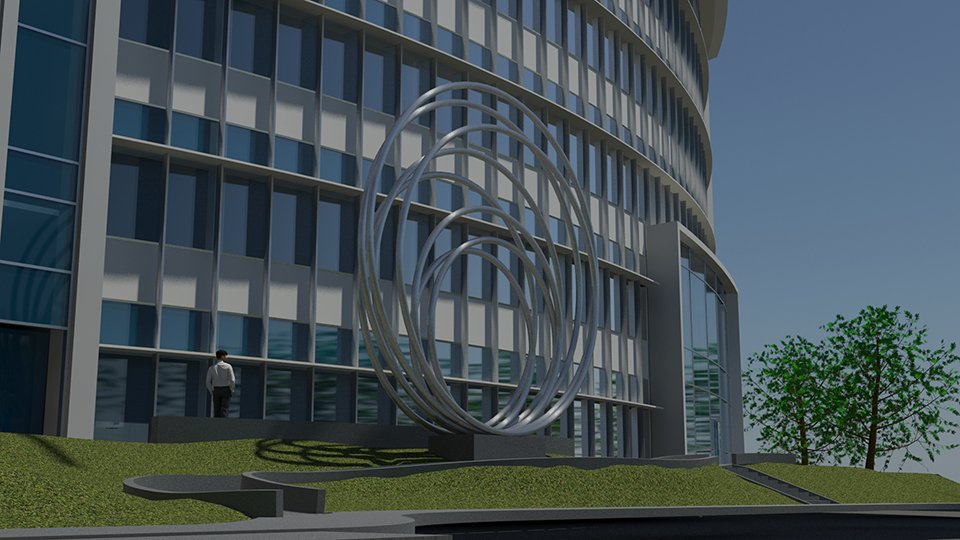
Gordon’s concept, Droplets, is a dynamic interpretation of the ripple effect, where a single action causes a series of waves to spread across the surface. In the study of physics and fluid dynamics, this process is known as a capillary wave and demonstrates the principle of minimum energy and second law of thermodynamics. In its most basic explanation, when a pebble is tossed into a calm lake, water is pushed away from the area of impact in the form of a ripple. As the pebble sinks, the water rushes back to fill in the space left behind, creating a splash and causing even more ripples to form. With each subsequent ripple the microscopic water molecules of the lake surface move up and down, pushing energy outwards and away towards their neighbor, distributing the energy of the pebble’s impact in an attempt to return the lake’s surface to its original state.
Water is essential for life: hydrating our bodies, cooling our planet and nourishing the food that we eat. Its very presence is a symbol of the connected systems of life. With its larger-than-life expressions of water droplets, this concept demonstrates a tangible translation of very concepts that are being studied by the scientists and researchers who inhabit the Menlo Park Labs. Each droplet ranges in height: at 19-feet, 15-feet and 12-feet, and is rendered in mirror-polished stainless-steel. As an aesthetic expression, Droplets exchanges the calm surface of the lake with the physical landscape at 1305 O’Brien Drive. Each droplet impacts the landscape, its outward energy is depicted as an undulating berm of earth, rippling outwards from the lab’s façade into the community.
As the viewer interacts with the droplets and shifting landscape they cause, a second level of engagement emerges – the mirrored surface reflects the viewer, sharing the idea that we, like the droplets, have an impact on the environment that surrounds us.
Tarlton’s Adams Drive property includes 255,000+ square feet of life science research and development spaces as well as innovative amenities, responsible landscaping and a network of urban bee hives. These hives house more than 20,000 bees who operate within a three-mile radius of each hive, collecting nectar from the surrounding plants and contributing to the resilience of the Menlo Park Labs campus and preserving bee species for future generations.
Gordon’s concept for the Adams Drive facility is a subtle and humorous nod to the driving force behind so many of the world’s scientific discoveries – caffeine. Based on the hexagonal structure of the caffeine molecule (known to the scientific community as C8H10N4O2) Hexagons stands approximately 17-feet in height, a highly visible and fitting tribute to the popular stimulant. Each three-foot diameter hexagon is fabricated in durable aluminum and holds a panel of dichroic glass. With its light-sensitive, reflective and color-changing properties, dichroic glass is a dynamic and ever-changing material that lends a burst of color and visual complexity to the sculpture.
In addition to its molecular likeness, Gordon’s Hexagons concept also references Menlo Park Labs’ other resident – the honeybee. As one of the strongest geometric shapes, the hexagon is found throughout nature, including in the efficient and stable structures of a beehive. The hexagonal shape is the ideal load-bearing shape for the honeybee as, unlike a circle, hexagons fit together perfectly and without any gaps between cells. This allows the bees to store the maximum amount of honey while using the minimum amount of wax.
Whichever inspiration resonates with the viewer, Hexagons is no doubt a stimulating and sweet addition to the Menlo Park Labs campus.