

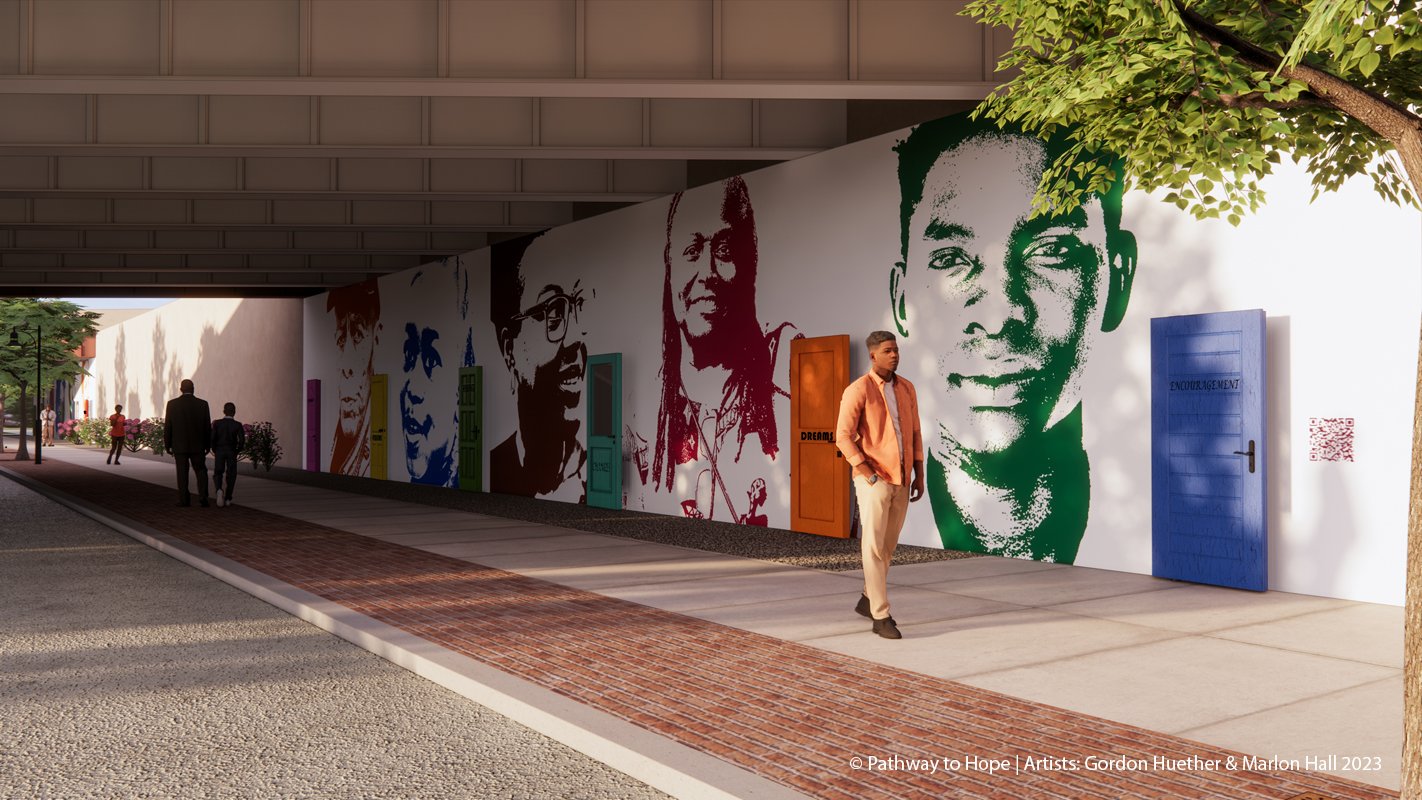
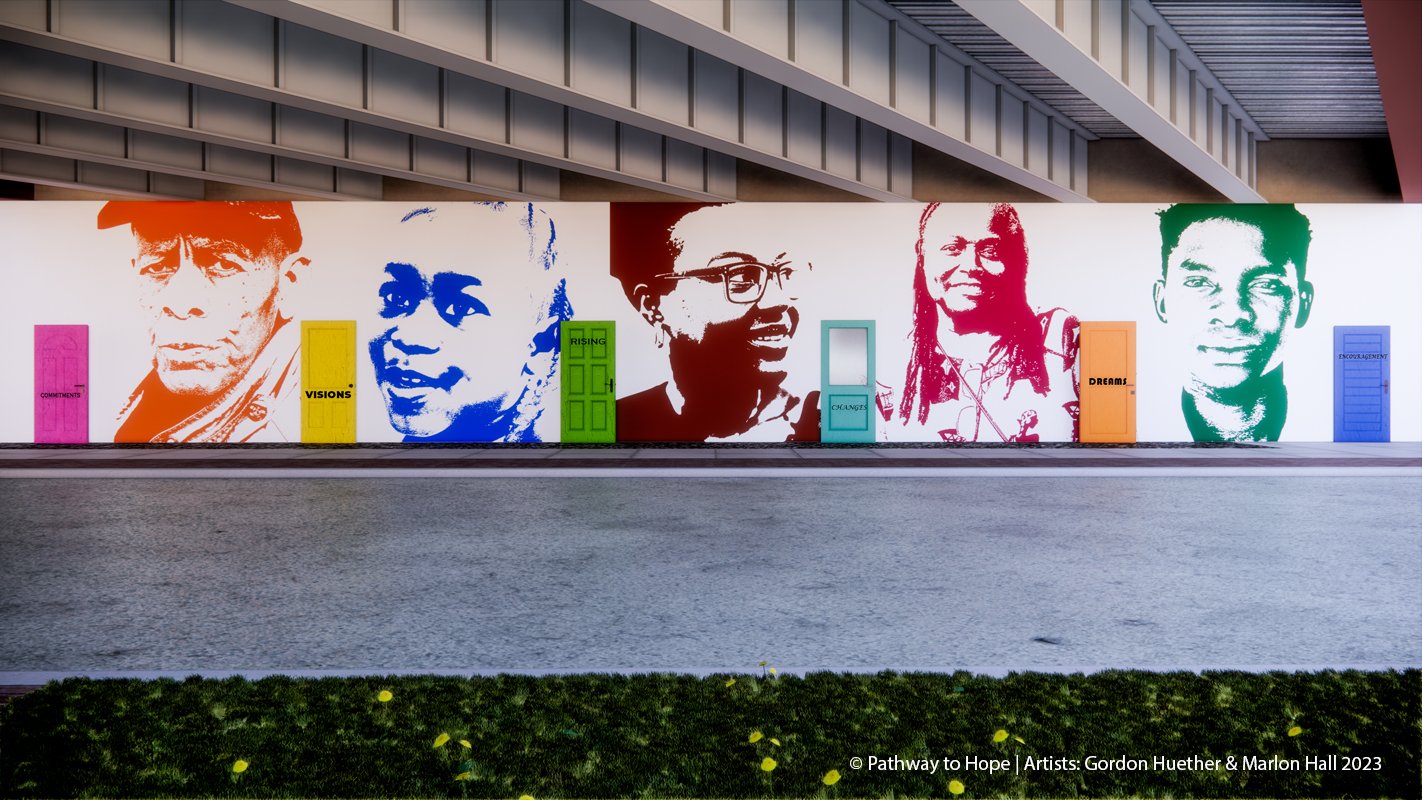
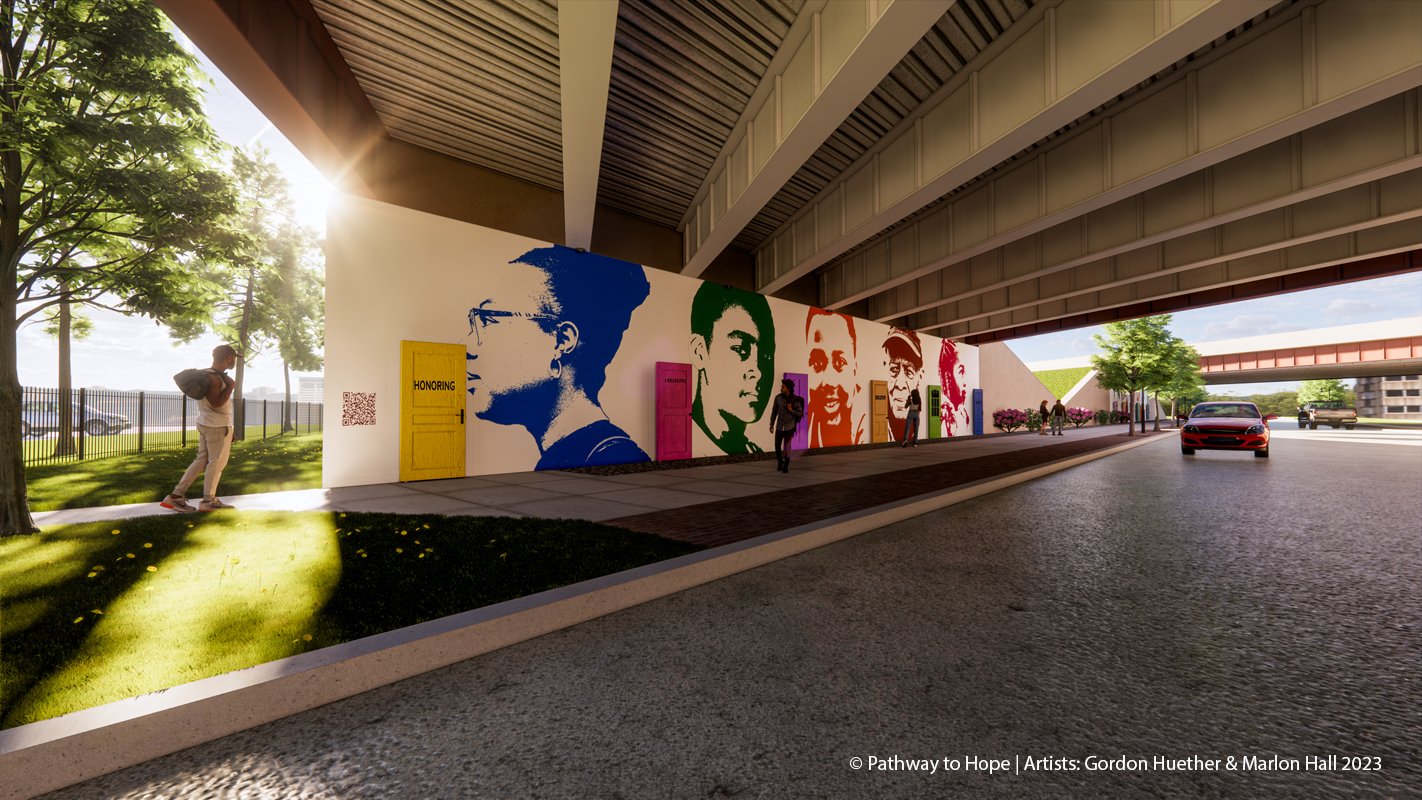
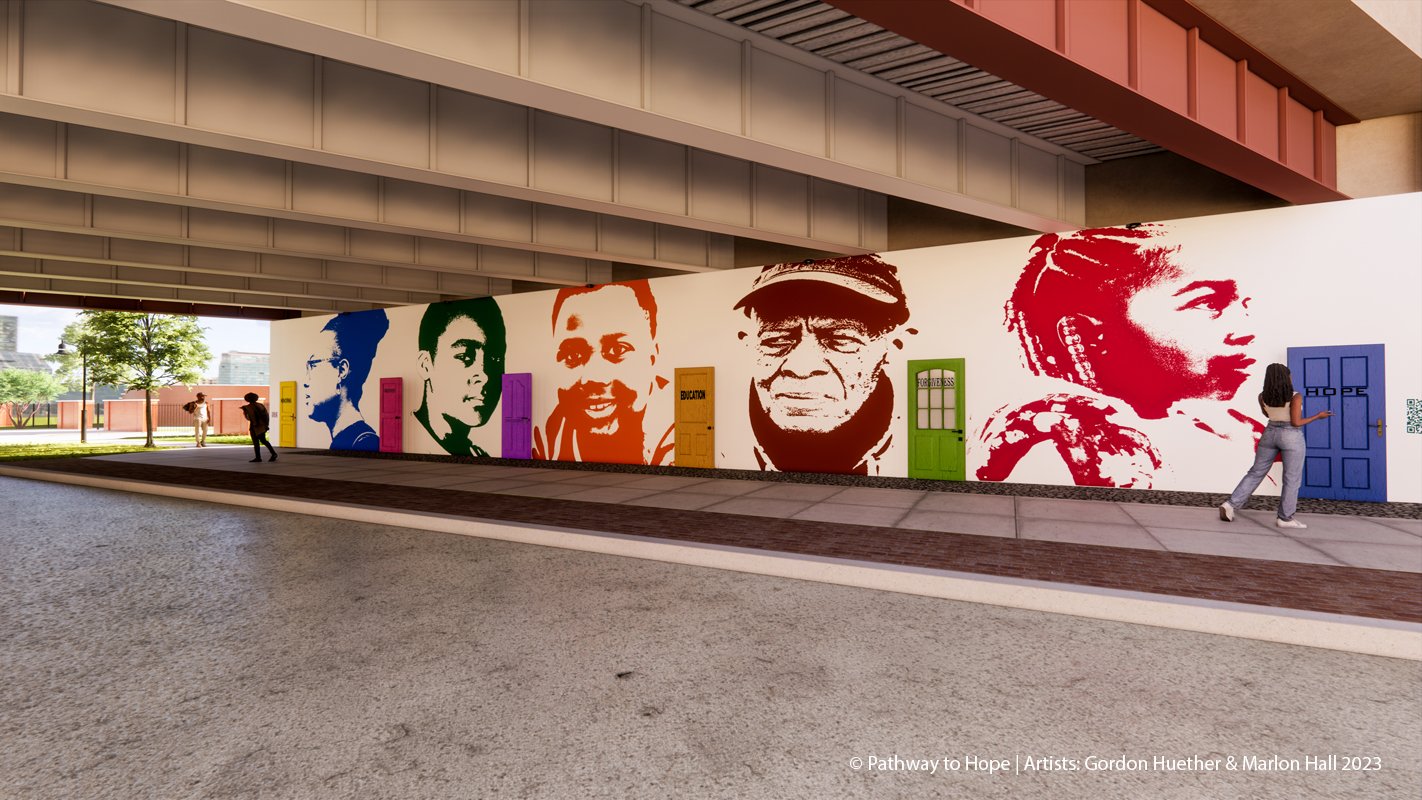
Doorways to Hope | Tulsa, OK | 24-Repurposed Doors, Painted Murals, Lighting, Q-Codes / Interactivity |
Gordon works with artist and visual anthropologist Marlon Hall to honor those who lost their lives in the Tulsa Massacres of 1921. With this project, their goal is to reposition and honor the voices and experiences generations of Black Tulsans who, despite horrific violence, urban displacement, societal ignorance, discrimination and disregard, have survived, flourished and embody the principles of hope, equality, and community.
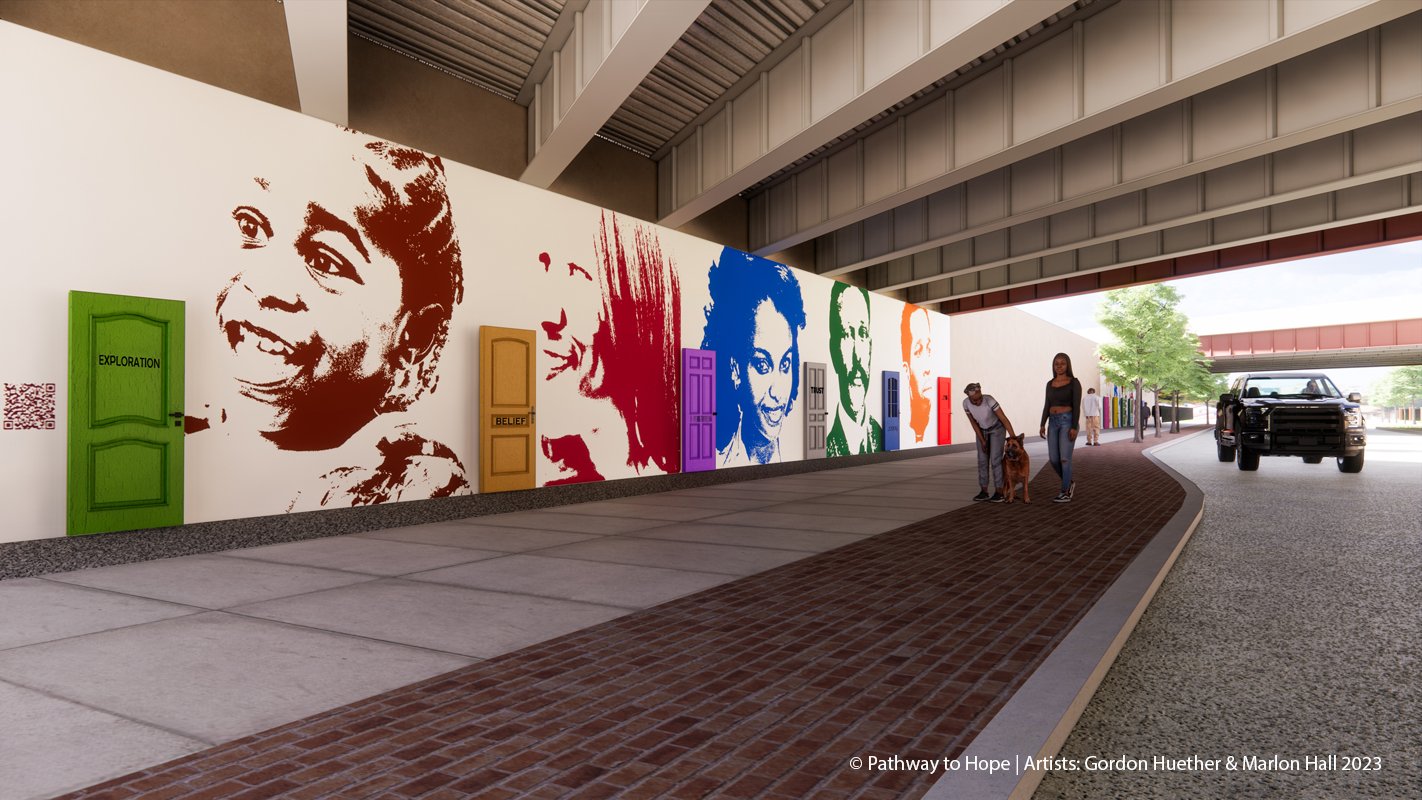
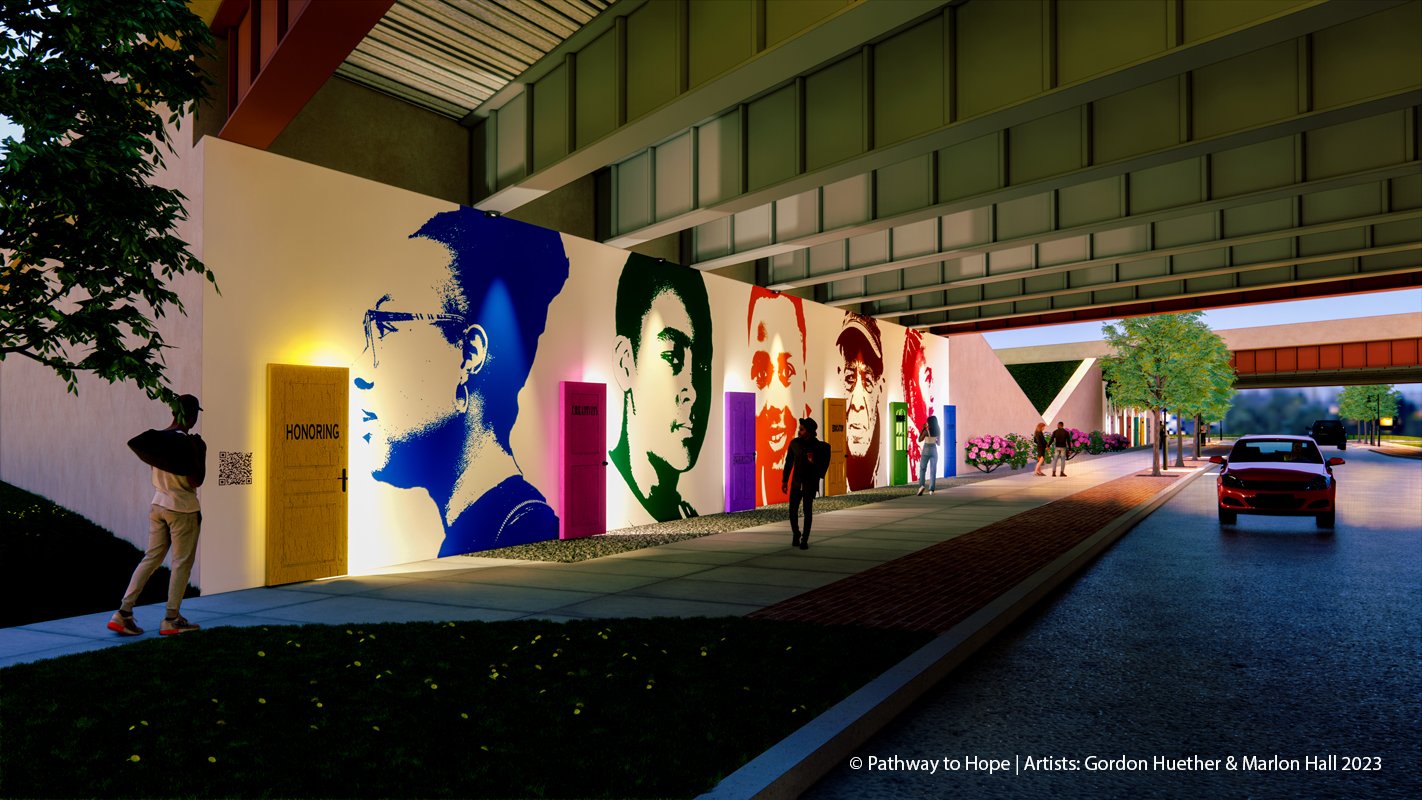
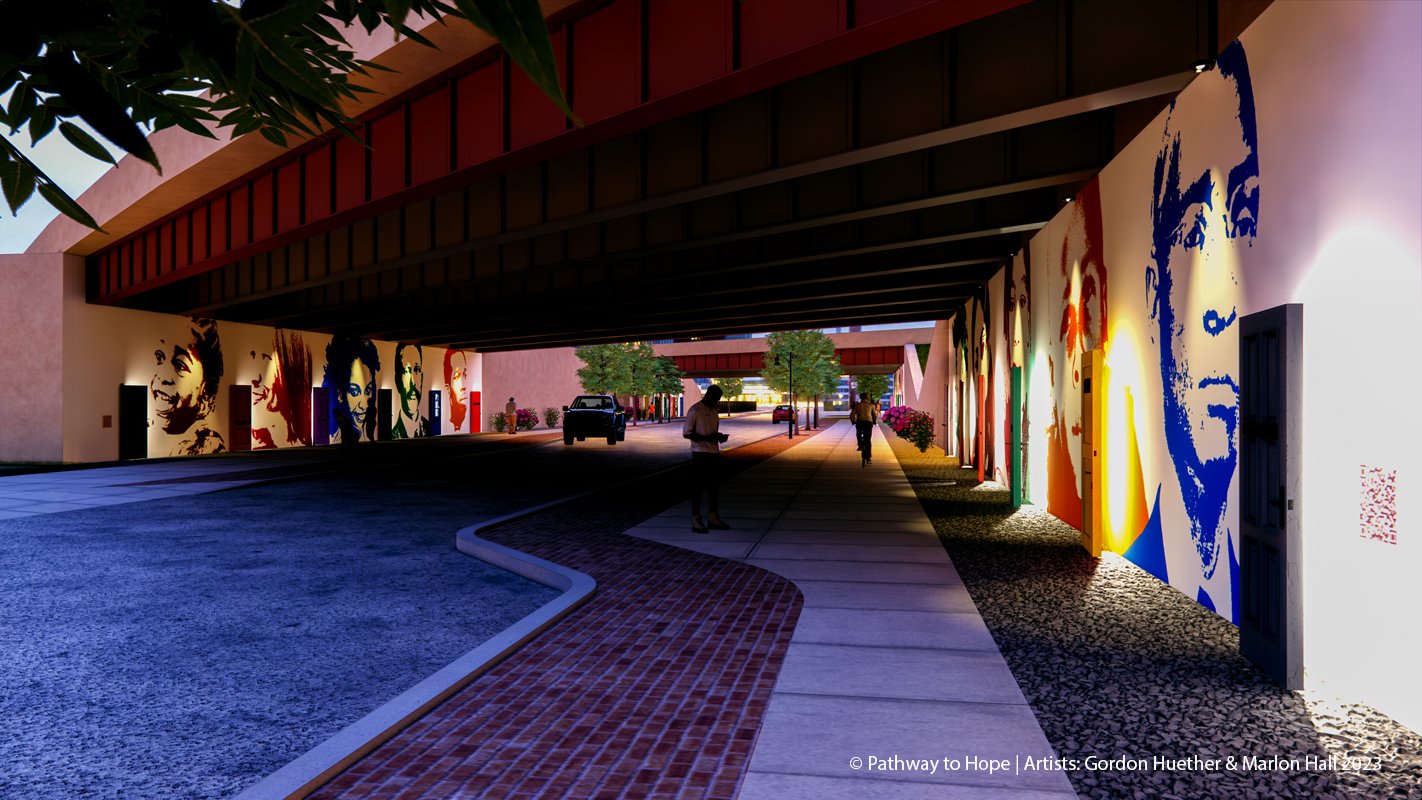
Doorways to Hope is an assemblage of images and sounds, art and stories, color and light that will result in a multi-layered experience for the viewer. The four underpasses of Elgin Avenue provide the opportunity for enlightening and multi-sensory experiences. Whether on foot, bike or in a car, Tulsans can engage with the Doorways to Hope in a variety of ways, transitorily or through a deeper immersion. No matter the level of engagement, this project brings beauty, light and a sense of hope to an underutilized space.
The language, vision and images of the Tulsa community are an integral part of Doorways to Hope. Community engagement is an essential component of public art and for this opportunity, it is paramount.
Archival research, cultural artifacts, photography, word prompts and storytelling are the source material for the visual and audio experiences of this installation. With the implementation of QR Codes, the full range of expression and experience is accessible to the entire community. The underpasses of Elgin Avenue will serve as living archives for the expressions, faces, words and stories collected from the community of Tulsa. The goal is both to reflect and activate the deepest expression of hope in Tulsa.
This project was made possible by the Oklahoma Arts Council Art in Public Places program with funding from the Oklahoma Department of Transportation.
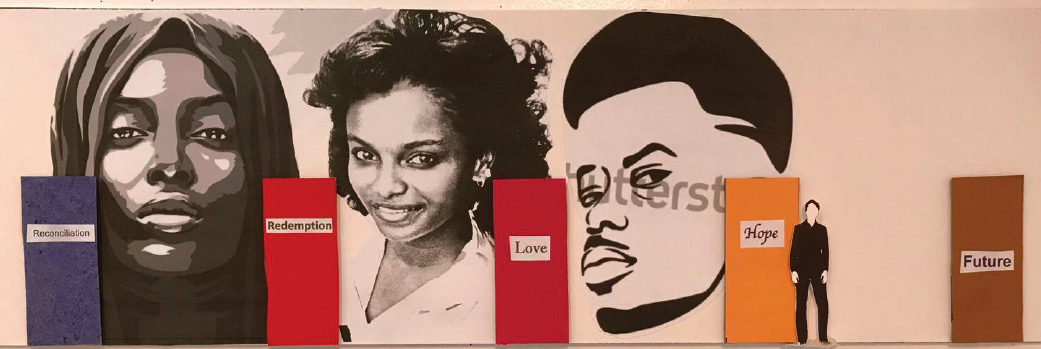
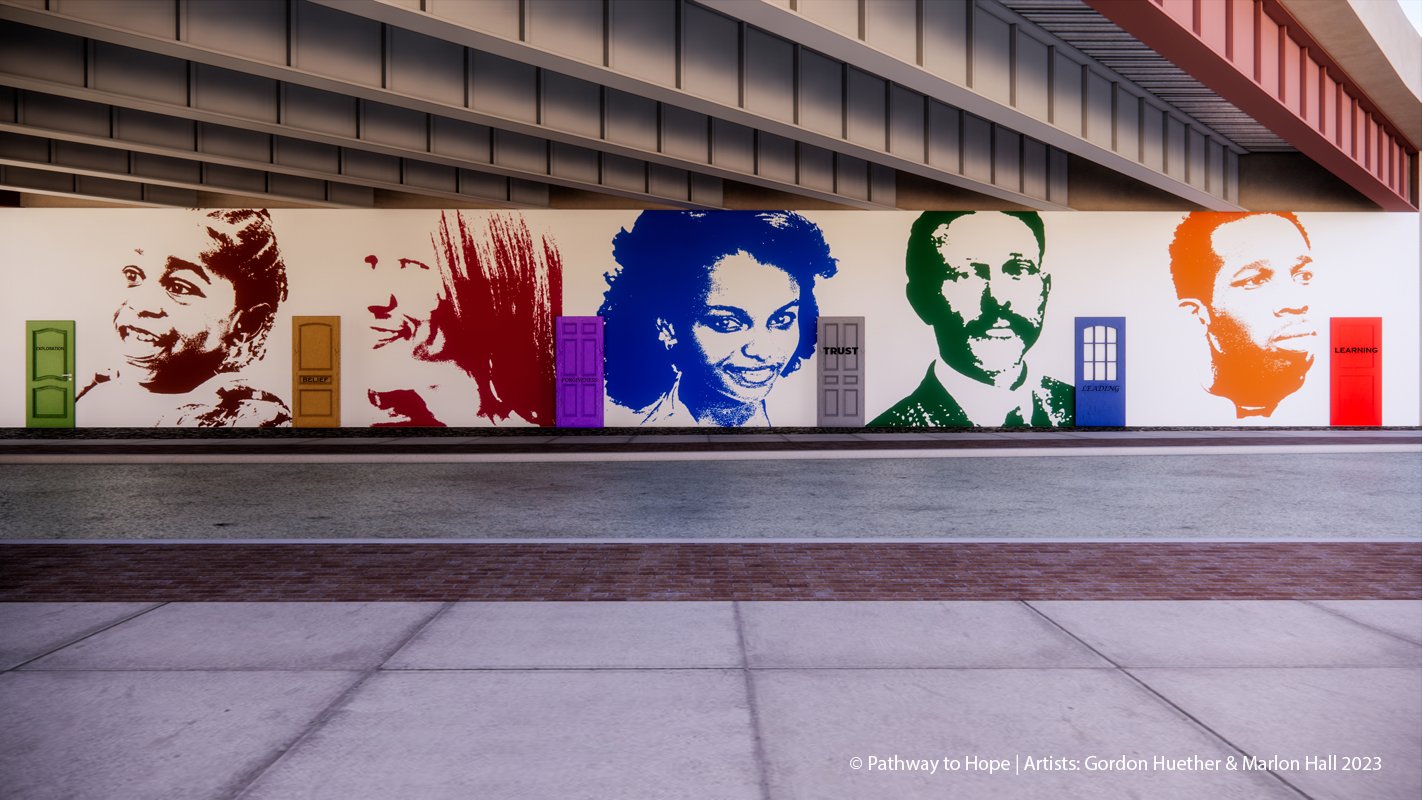
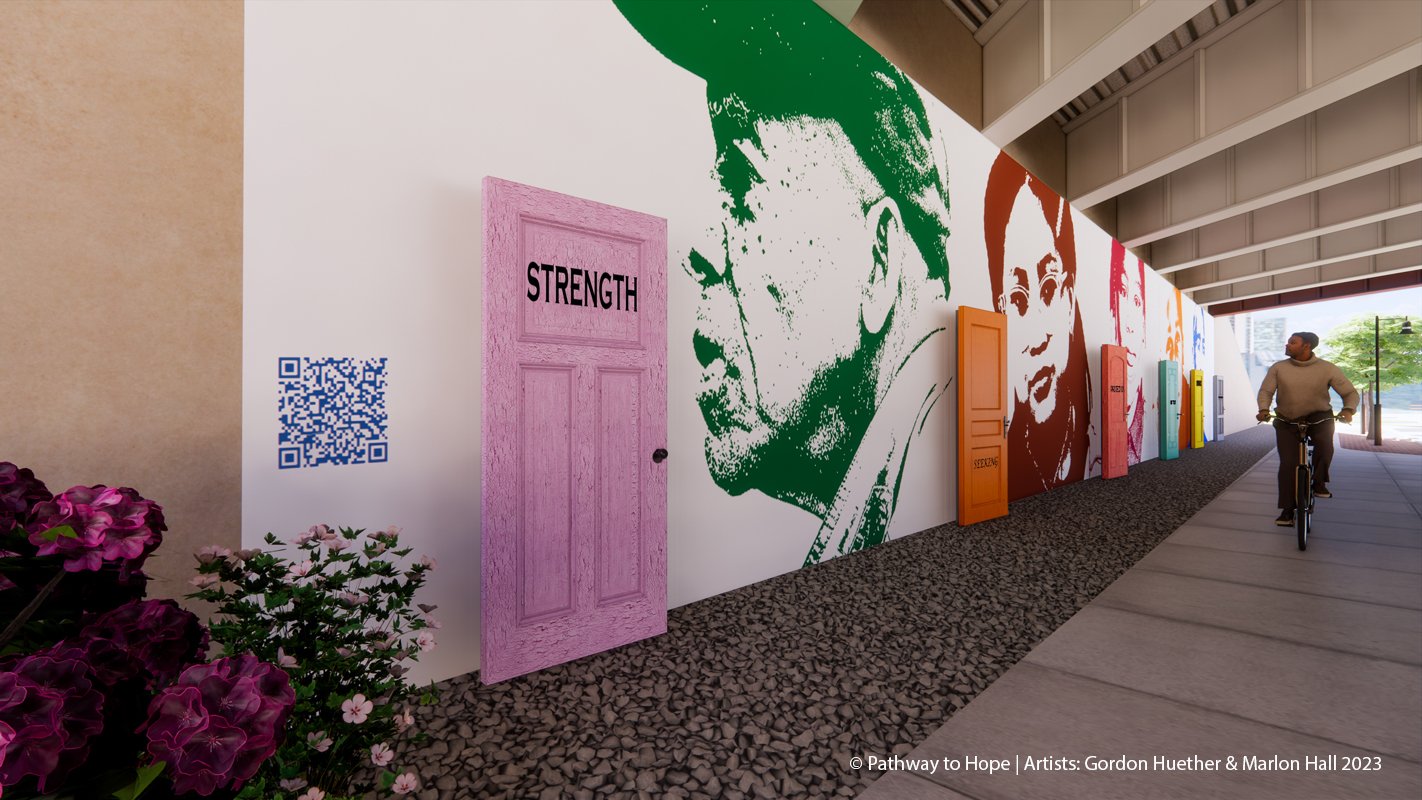
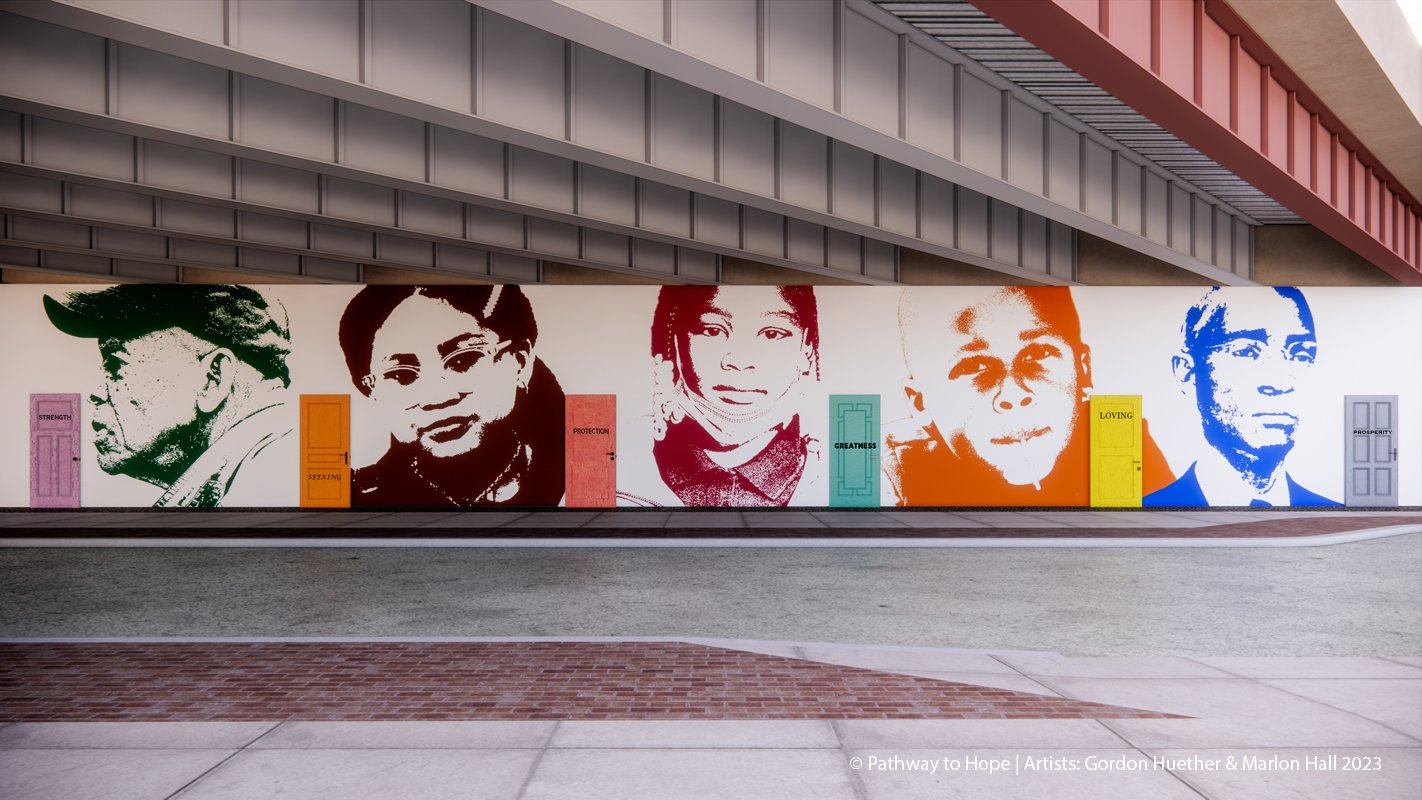
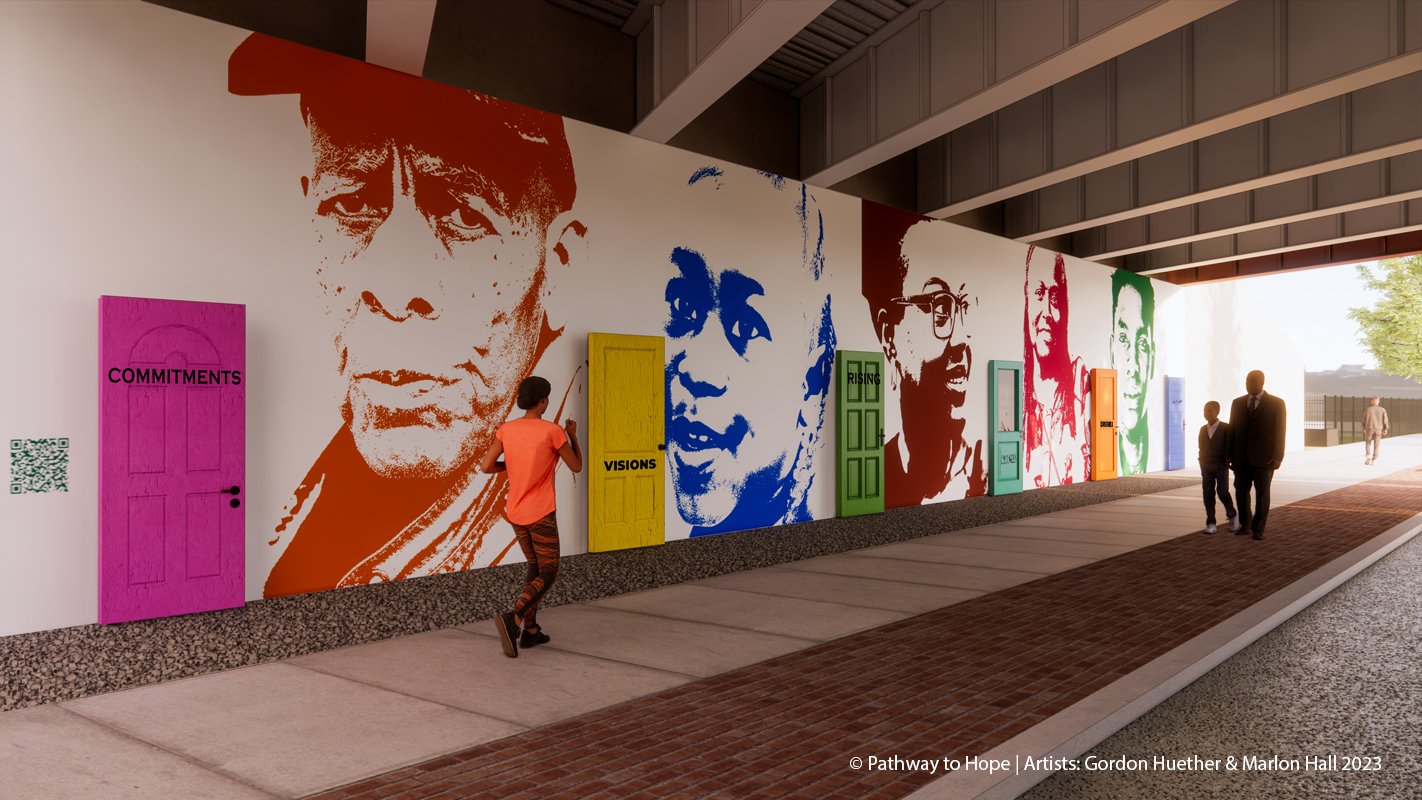
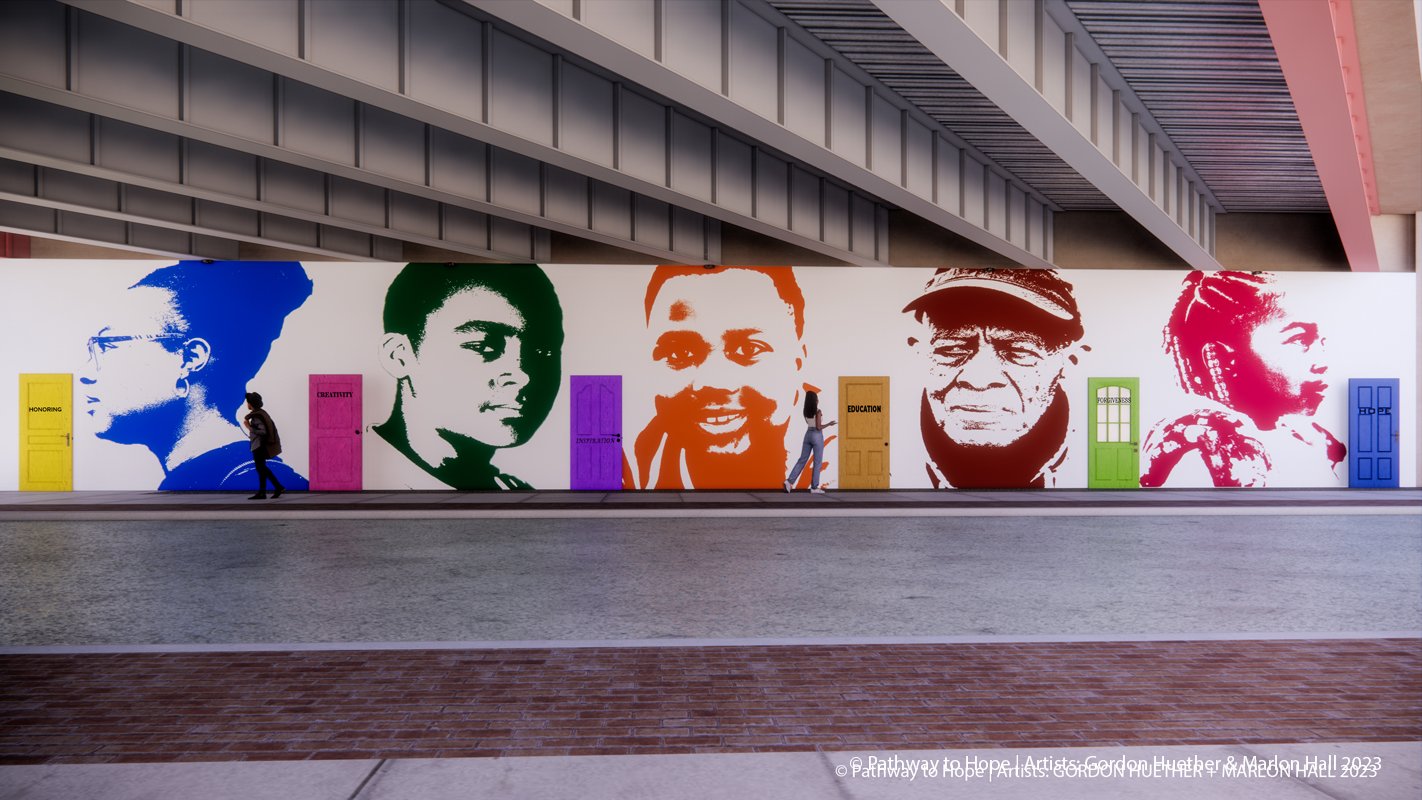
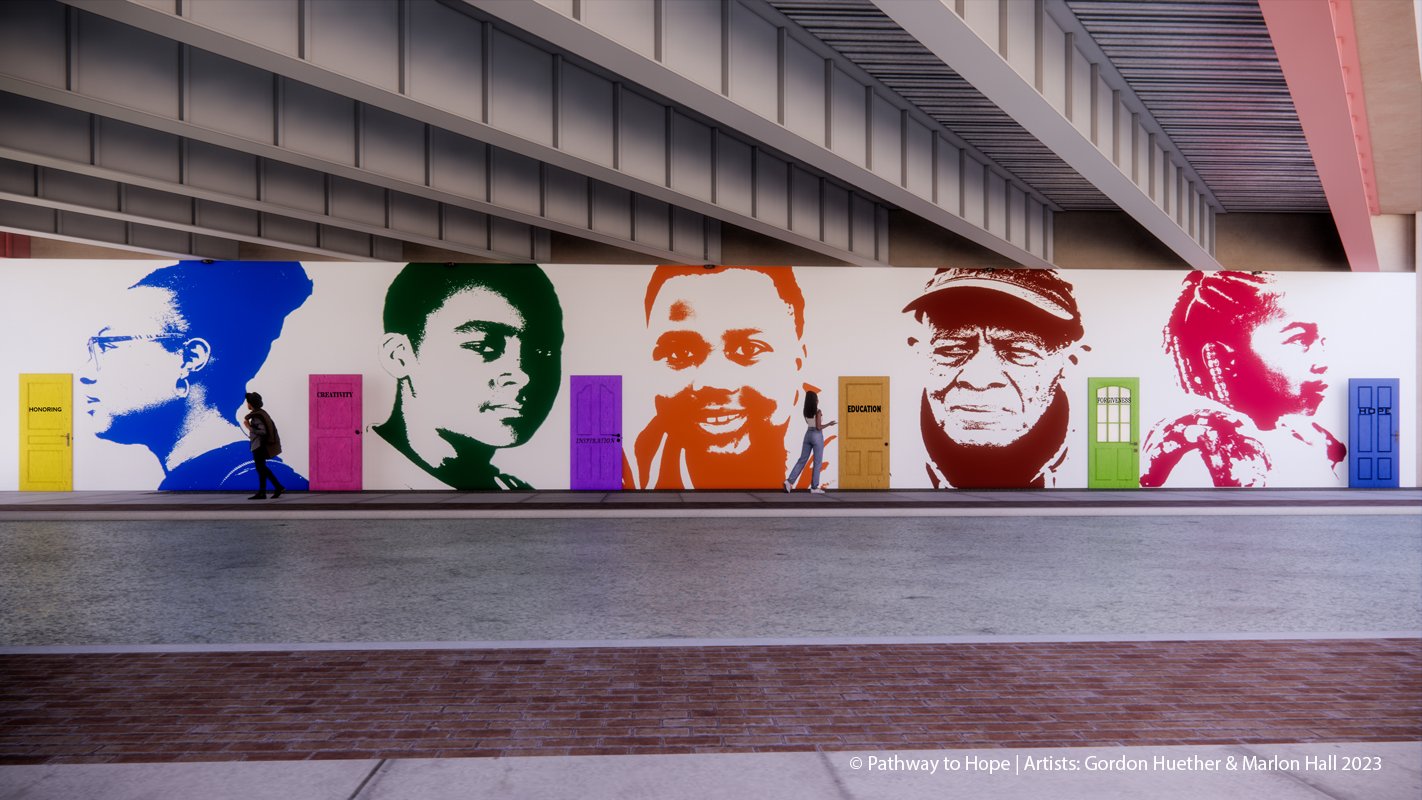
The concept of Doorways to Hope utilizes repurposed doors, lighting, QR codes, and paint. 24 repurposed doors acquired from the local community will be mounted to the walls, and the murals will be images selected through a Tulsa community engagement process. With this simple yet bold and straightforward gesture, we seek to include and engage the community with iconic, familiar and visually arresting portraits of community members.
QR Codes will be applied to the walls. Each QR Code will contain a link to audio and visual digital materials that will contain the voices, stories and images of community engagement participants. Each door is an architectural and historic reference to the homes of Black Tulsans that were destroyed in the Wall Street Massacre of 1921.
The doors also have metaphorical meaning. Each door acts as a portal, a passageway towards a better future, towards hope. Lighting is not only practical but also conveys a message of a hopeful and illuminated journey.
PRESS: